|
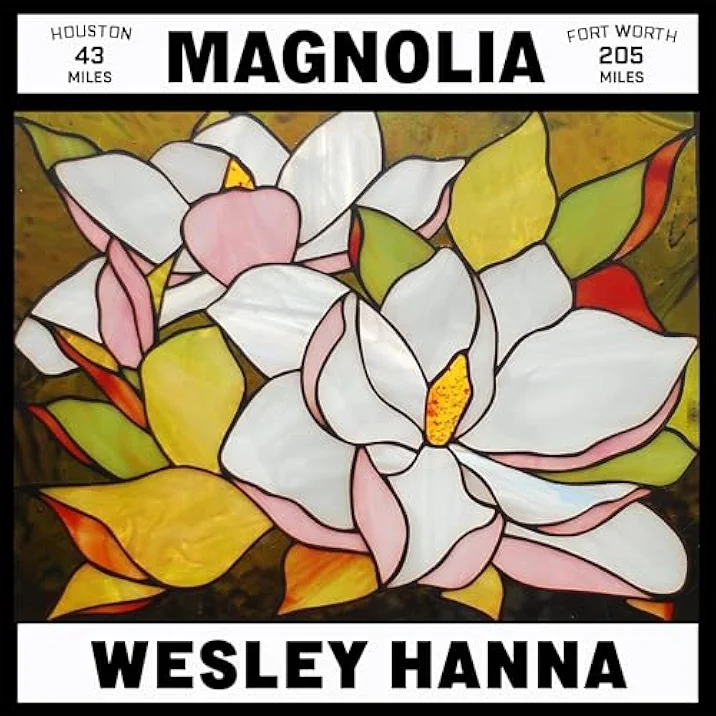
Wesley Hanna, Magnolia (Hanna Music Group, 2025) Recently, the most commercially successful act on the current mainstream-country scene stirred a degree of excitement within the ranks when he casually acknowledged that he himself doesn't listen to country music. It was, however, a small stir, scarcely registering outside the modest core of hard-core fans and genre guardians. My personal response varied: (1) Why should I care? (2) Why should I blame you? (3) Why do your fans consider you a country singer anyway? (4) Why don't you just go away? Of the several musical styles that have accompanied me through a lifetime of varied but massive listening, none has ever irritated me so consistently as country, which at times is mostly garbage consumed by either an audience largely not paying much attention or one with nearly inaudible taste. What does surprise me more than anything is that in spite of it all, the industry -- which is what it is: commerce through and through -- has still managed to produce a sufficient body of worthy songs and performers to justify its continued existence. To contemplate these issues too much is to live in a state of alarming irritability. If you're far enough along, you may be tempted to remove the questions wholesale and go on to more productive matters, for example by removing country from your ears entirely. If you're just now thinking about enrolling as a fan -- easily done, since country is undergoing one of its fashionable periods and is readily available -- keep in mind what your fate may be: tying yourself to music that is at once often-fluffy pop and, moreover, caught in a virtually defining relationship with the marketplace. I am not joking when I say that a single banal ditty can claim as many as six or seven Nashville "co-writers" in its quest for a top position on the charts. If you find that practice acceptable and the result listenable, you and I don't have much to talk about, I'm afraid.
This, of course, should be treasured as long as it lasts. A robust independent-country movement of mostly younger performers and songwriters, one is tempted to hope, will drive the kind of revolution that occurred within rock and pop in the mid-1960s, except that if genre history is any guide (and it has been so far), the manifestly all-powerful Music City suits will triumph once more and discerning listeners will have to go back to whatever was filling their ears before the dream was dashed. Meanwhile, Fort Worth-based Wesley Hanna's day job has him sitting at a desk doing his share to help the Texas oil industry generate profits. In Magnolia he's honest enough to wonder openly (in "The Right Thing"), Am I supposed to be a poet or a burned-out corporate slave? He will have to decide that for himself, naturally. But from this purely selfish perspective I'd say that whatever it takes to make country of this quality is to be encouraged. While Hanna doesn't sound like a Hank Williams imitator, his link with that end of country performance is unmistakable. It's a modestly nasal vocal, a classic first-rate band with prominent steel and fiddle, and a relatable perspective on life's joys, sorrows, confusions and complications, built around a broad narrative celebrating in this instance -- lovingly but unsentimentally -- family history. Only one track ("Forever Kind of Love," no surprise) fails to rise above cliche. But others, notably "Unkept Leather," turn to intriguing metaphors and attach memorable stories and emotions to them. The title song represents two unrelated numbers, "Magnolia," one (#5, a Hanna original), the other (#11, by the late Charlie Robison). The latter is in the vein of an oldtime acoustic Southern folk song with banjo and fiddle. "Thomas B. O'Hara" amusingly chronicles the adventures of a partying Texan, evidently Hanna himself, in the watering holes of Dublin. Engaging country music is happily in abundant supply these days. Magnolia is the kind of recording that, far from wearing out its welcome, only further ingratiates itself with each successive listening. More country music like this, and maybe I won't be so grumpy so much of the time. 
|
 Rambles.NET music review by Jerome Clark 18 October 2025 Agree? Disagree? Send us your opinions!  



 |