|
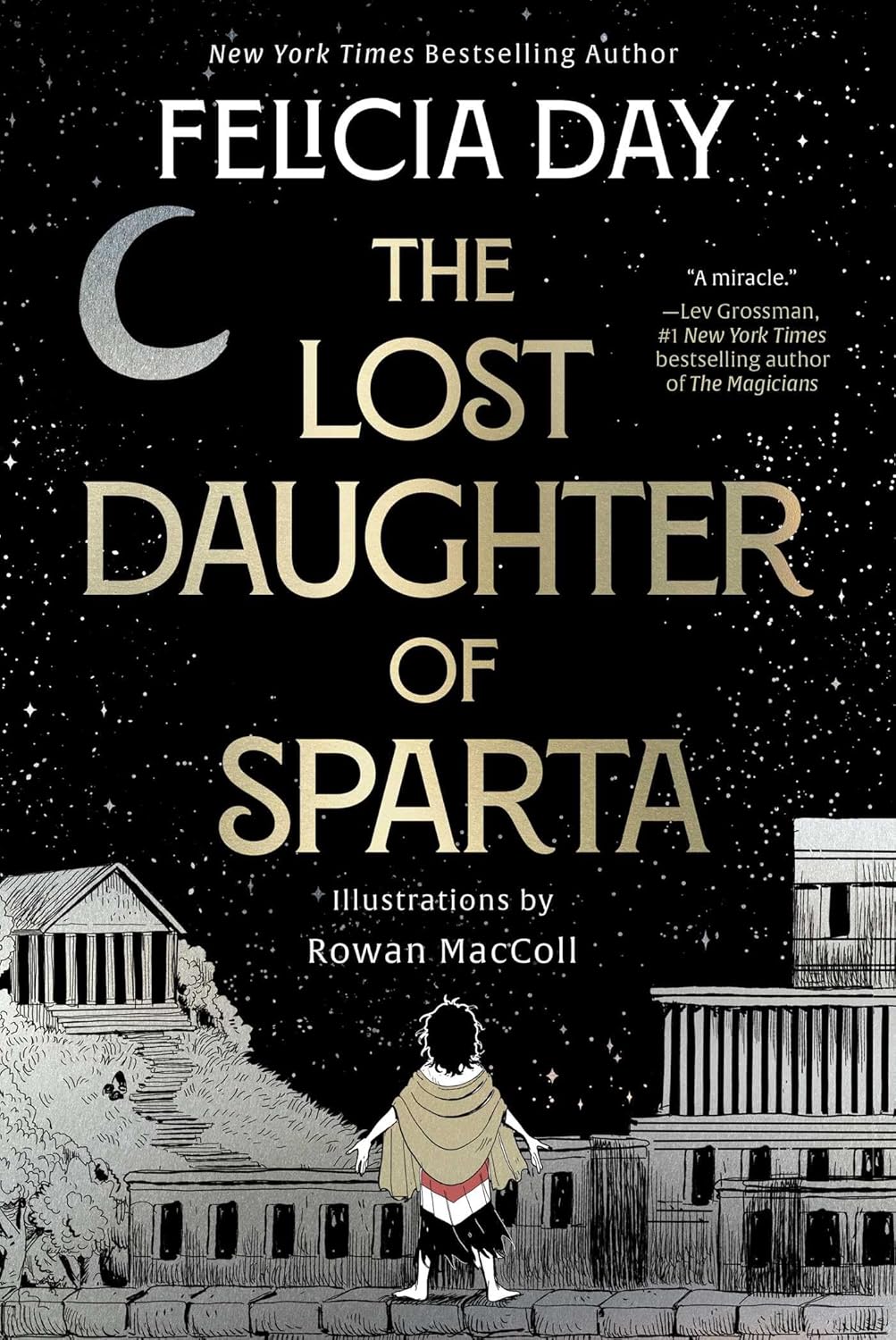
The Lost Daughter of Sparta by Felicia Day & Rowan MacColl (Gallery, 2026)
The Lost Daughter of Sparta is a graphic novel about Philonoe, the often-forgotten and rarely mentioned fourth daughter of King Tyndareus and Queen Leda. Her older sisters are Helen of Troy, Clytemnestra, and Timandra, all of whom dramatically betrayed their husbands because of Aphrodite's curse on the family. (The goddess was angry, according to the legends, because Tyndareus failed to honor her while making sacrifices to the gods.) Day, for the record, has been on my radar since she appeared as the sweet-natured would-be girlfriend Penny in Dr. Horrible's Sing-Along Blog, followed by her cult-favorite web series The Guild. I've seen her in other things since, of course, and realized I had actually seen her before when rewatching the last season of Buffy the Vampire Slayer (Day appeared as Violet, a potential slayer whose powers are activated by magic so she can help defeat the First Evil.) These days, she's a mother as well as a creative force, and as she explains in an author's note at the end of this book, the many sleepless nights that followed the birth of her daughter Calliope led her to dig deeply into classic mythology. Initially, she says, she was looking for something dull enough to help her sleep, but she ended up becoming obsessed with the stories. She was inspired to write a story about Helen after learning that her flight from Sparta to Troy might have been because of the curse, not intentional betrayal on her part, but Day's focus shifted after discovering the fourth daughter, about whom very little has been written beyond an aside that she was "made immortal" by the goddess Artemis, with no explanation given. Day decided that story needed to be told, even if she had to make it all up. And so we have The Lost Daughter of Sparta, written by Day and illustrated by Rowan MacColl. According to Lost Daughter, Philonoe is born in the early days of the Trojan War. Her parents, disgusted by the wine-colored birthmark covering part of her face -- a sign, they believe, of Aphrodite's continued disfavor -- send her to be raised by lowly goatherds until they have need of her. Now, with the war over and new allegiances being formed, they have betrothed her to Vasilios, prince of Gla, who is likewise repulsed by her disfigurement but, needing the alliance, orders her to wear a veil at all times. Desperate not to betray her future husband and disappoint her parents, Philonoe appeals to Artemis and Aphrodite to break the curse, and Aphrodite -- amused by her boldness -- gives her three quests that she must accomplish in the 10 days before her wedding: obtain a shawl woven from starlight by the gorgons Stheno and Euryale, surviving sisters of Medusa; steal a pearl from the she-dragon Echidna; and kill a magical golden bird and bring back its feathers. Artemis, although not directly involved in the curse or the quests, finds herself drawn along on the journey, helping when she can, even though she's annoyed by Philonoe's ultimate goal. Along the way, she shares stories, such as her ill-fated love for the hunter Orion and the fates of Philonoe's distant sisters. Of course, Philonoe might find her purpose and desires altered by the end of her journey, particularly after she finds herself actually talking with her antagonists rather than simply slaying and stealing from them, as a Heracles, Perseus or Theseus would likely do. Eventually, Philonoe must decide who she wants to be and what she really wants from life, redefining her own sense of identity and self-worth. It's a magical story, certainly one that could resonate with readers who are struggling with their own sense of self and place in the world. In Day's interpretation, the gods and goddesses of Olympus are suitably fickle, easily offended and angered, and at times careless of the lives of mortals who worship them, but they also seem to have their best interests at heart, with punishments and curses designed to teach, if the person is open to the lesson. I'll admit, I don't love the art, which is stark and rigid, lacking in color and detail. MacColl illustrates the story in simple ink drawings, using only black, white and a garnet red that makes Philonoe's birthmark and other sparse details stand out. It's an effective palette, and MacColl has an expressive style, but I'm not overly fond of the sharp-nosed look of her characters. It's distracting, but it didn't detract from my enjoyment of the book. The Lost Daughter of Sparta is a good book, a deeply touching story, allowing Philonoe to evolve from a forgotten name from ancient Greek into someone with more dimensions than most of her peers. Day has written a lovely new chapter that anyone -- but particularly someone who feels out of place or marginalized in the world -- can enjoy. 

|
 Rambles.NET review by Tom Knapp 18 July 2026 Agree? Disagree? Send us your opinions!  



 |